How We Think About Safe Cleanup and User Control
Why BlueHammer Cleaner is review-first: nothing gets deleted without you seeing what it is, why we think it's safe, and how to undo it.

A cleanup tool asks you to delete files you didn’t create, in folders you’ve never opened, on the tool’s say-so. That’s a lot of trust to ask for, and the tool’s whole job is to earn it. One-click “deep clean” buttons don’t earn it; they just hope you won’t look too closely. We built Cleaner the other way around, and here’s the thinking behind each of the choices that follow from that.
Review first, always
Every scan produces a list you can read before anything happens. That’s the core decision, and everything else is downstream of it. Cleaner finds candidates for removal and then stops, and hands them to you.
Each item in that list says what it is, which app created it, and why we think it’s safe to remove. Nothing is pre-checked into oblivion, so there’s no default “select all and delete” that treats your review as a formality. The items we’re less sure about are marked to review carefully, because a file that’s recent, that you made yourself, or that’s shared between apps is exactly the kind we’d rather not guess about.
Deletion in stages, not all at once
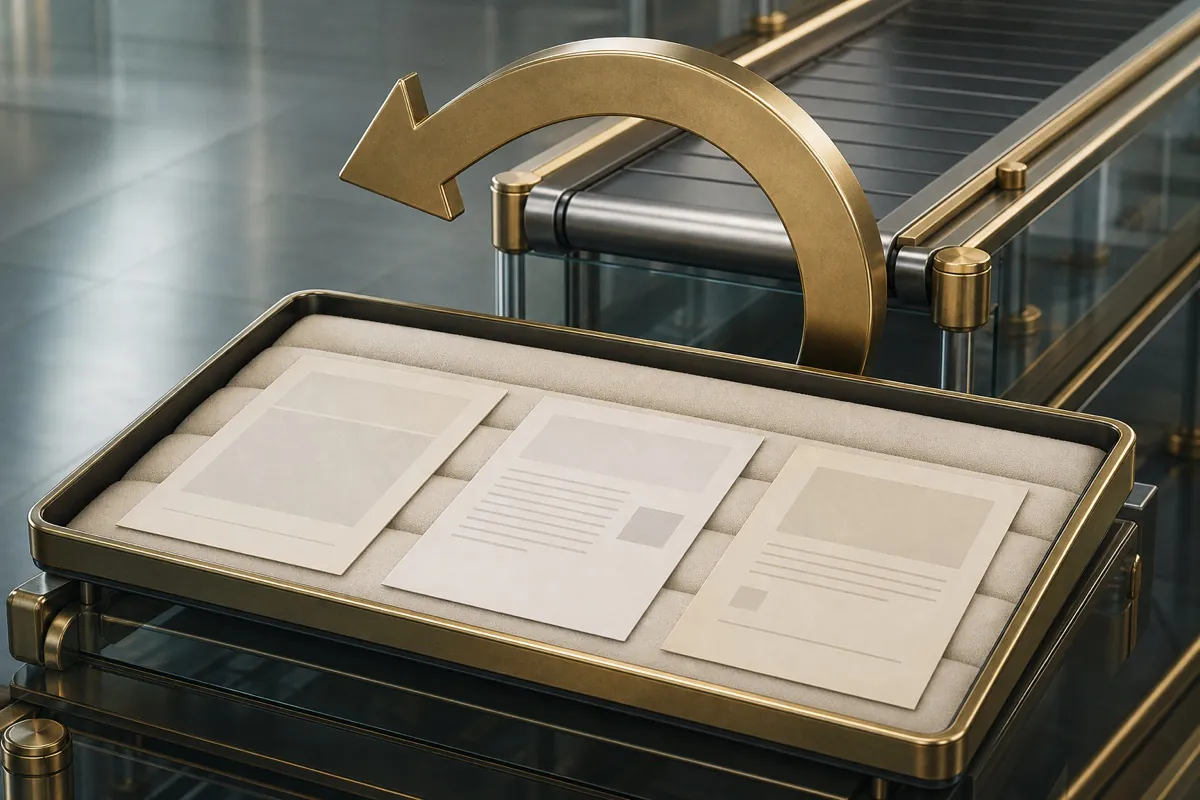
When you do remove something, it doesn’t vanish. Removed files move into a staged holding area first, with a window during which you can bring them back with a single undo. Only after that do they leave for good.
This sounds like a small detail and it’s the one that matters most. The difference between “undo” and “restore from backup” is the difference between a shrug and a lost afternoon. Everyone makes a wrong call eventually, including people who read every line of the list. Staging means the cost of a mistake is a click, so you can act on a scan without the low hum of worry that you’re about to delete the one file you needed.
The staging area isn’t a second thing you have to manage, either. It clears itself after the recovery window closes, so it doesn’t quietly become its own pile of storage you’ll need to clean up later. During that window the files sit there recoverable and out of the way, and after it, they’re gone for good with no further prompting. The goal is a safety net you don’t have to think about, not another folder to maintain.
No scare theater
We don’t paint numbers red to make them look urgent, and we don’t lead with a “found 12,000 items!” headline. That number is technically true and almost entirely meaningless, because 11,900 of those items are 4KB cache stubs that macOS will recreate the moment an app runs again. Presenting them as a crisis is theater, and it’s the reason cleanup tools have the reputation they do.
The inflated counts usually come from the same murky place people worry about when they see System Data grow. If you’ve ever wondered what that category actually holds, we wrote a plain explanation of what System Data means on Mac. The short version is that most of it is normal, and a good cleanup tool should tell you that instead of alarming you about it. We’d rather show you a smaller, honest number and let it be boring.
Honest claims, and what stays on your Mac
Cleanup reclaims space. It makes a Mac faster only when the disk is nearly full, because macOS needs free room to manage memory and its own housekeeping. On a Mac with plenty of space, clearing more won’t speed anything up, and we say so inside the product rather than implying otherwise to make the tool feel more powerful than it is.
The scanning itself happens on your Mac. We don’t upload your file lists to figure out what you have, because there’s no good reason we’d need a copy of the names and locations of everything on your disk. The analysis that decides what’s removable runs locally, and the results stay with you. A tool that reads your whole disk has every reason to keep the reading close, and none to send it anywhere.
Where review-first costs us
Being honest about the trade: review-first is slower than one-click. A person who just wants a button to press will find a competitor that promises to do it all in a single tap, and some of them will prefer that. We’re fine with the trade. A cleanup you didn’t watch is a cleanup you can’t fully trust, and we’d rather be the tool you keep than the one you uninstall after it removed something you wanted. If you want to see how these choices show up in each release, our monthly product updates track the changes as they land.
Common questions
Does Cleaner delete files permanently right away?
No. Removed files go through a staged holding area with a recovery window before anything becomes permanent. If you change your mind, undo is a click rather than a restore from backup. The staging step exists precisely so a wrong call is a shrug instead of a bad afternoon.
Why are some items marked 'review carefully'?
Because we can't classify them with high confidence. They tend to be recent, user-created, or shared between apps, which is exactly the profile of a file that might matter. Rather than guess and risk removing something you wanted, we flag it and leave the decision to you.
Will cleanup make my Mac faster?
Usually not directly. Clearing space makes a Mac faster mainly when the disk is nearly full, because macOS needs free room to work well. The honest description is that cleanup reclaims space and attention, not raw speed, and we say the same thing inside the product.
Recommended next step
Make everyday Mac care easier with BlueHammer
Clean up storage, organize files, browse privately, and keep everyday protection in one place.
Learn how Cleaner works